Roof deterioration rarely announces itself dramatically. It tends to accumulate gradually — a cracked tile here, some faded coating there, moss settling into grout lines over a few winters — until the first leak makes it impossible to ignore. By that point, a restoration that might have cost $5,000 is competing with structural repairs that cost three times as much.
These seven signs are the early indicators that your roof needs professional attention. If you're seeing more than two or three, a roof restoration is almost certainly the most cost-effective path forward.
1. Water Stains on Ceilings or Walls
Brown or yellowish water staining on interior ceilings or upper walls is the most direct evidence of water penetration. The stain may not be directly below the entry point — water travels along rafters and sarking before dripping, often making it seem like the leak source is somewhere other than where it actually is.
Active leaks during rain are obviously urgent. But dried staining with no apparent current leak still warrants inspection — it indicates water has entered before and the entry point remains.
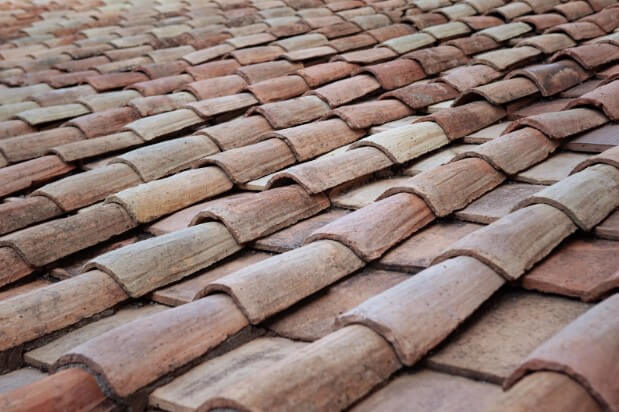
2. Cracked, Broken, or Missing Tiles
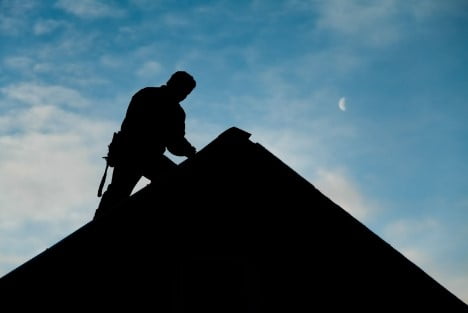
Individual cracked or broken tiles are direct vulnerabilities. Water enters through the break, runs under adjacent tiles, saturates the underlay, and eventually reaches the roof structure. In a summer storm delivering 50–80mm per hour — not unusual on the Central Coast — even a single broken tile can allow significant ingress.
If you're finding broken tiles regularly after storms or wind events, it may signal that the mortar bedding and overall tile condition are deteriorating beyond isolated repairs.
3. Deteriorating Ridge Capping
The ridge capping runs along the peak of your roof and is bedded in mortar. Over time — typically 10–15 years in coastal conditions — that mortar becomes brittle, cracks, and begins to crumble. When ridge bedding fails, the cap tiles become loose and water can enter at the highest point of the roof.
Re-bedding and re-pointing ridge caps is a core component of every roof restoration. If you can see gaps in the mortar from the ground, or if cap tiles have shifted, this needs addressing before the next storm season.
4. Moss, Lichen, or Algae Growth
Moss and lichen are more than cosmetic problems. Their root systems penetrate tile surfaces and mortar joints, accelerating deterioration. Moss also retains moisture against the tile surface, creating ongoing freeze-thaw cycling in cooler months that progressively weakens the surface.
The Coastal Climate Factor
The Central Coast's combination of high humidity, moderate rainfall, and nearby vegetation creates ideal conditions for moss and lichen colonisation. Roofs in shaded positions — particularly north-facing under tree canopy — can develop significant growth within 5–7 years of a new coating. Regular cleaning extends restoration intervals.
5. Your Roof Is 15+ Years Old with No Prior Restoration
Age alone doesn't mandate restoration, but it's a strong predictor of developing issues. A concrete tile roof installed in the 1980s or 1990s — common on the Central Coast — with no prior restoration is almost certainly overdue for a professional inspection at minimum.
Roofs older than 20 years with no documented maintenance history are high-probability candidates for restoration. The question usually isn't whether restoration is needed but how urgently.
6. Sagging or Visible Structural Changes
A visibly sagging roofline — whether at the ridge, at valleys, or across the plane — indicates structural compromise. This may be waterlogged sarking or insulation adding weight, compromised battens, or deteriorated rafters or trusses. It requires professional assessment immediately.
Sagging that is not addressed eventually results in roof failure. Unlike surface deterioration which restoration can address, structural sagging requires structural repair before any surface work proceeds.
7. Faded, Blistering, or Peeling Coating
If your roof has previously been coated and the coating is now blistering, peeling, or dramatically faded and chalky, it has reached the end of its protective life. A failed coating no longer waterproofs the underlying tile surface and needs to be removed, the substrate cleaned and prepared, and a fresh coating system applied.
Applying new coating over a failed existing coating is a common shortcut that fails within 2–3 years. Proper restoration strips the old coating and applies fresh product to a clean substrate.
What to Do If You're Seeing These Signs
The first step is a professional inspection — not a quote call, but an honest condition assessment. A good inspector will tell you whether restoration is appropriate, whether individual repairs are sufficient, or whether the roof has deteriorated beyond what restoration can address.
For proactive maintenance that prevents these issues from developing, see our guide to proactive roof maintenance on the Central Coast. For a full guide to what restoration involves and costs, see roof restoration.
Free Inspection
Concerned About Your Roof? Get It Assessed.
We'll inspect your roof, identify any issues, and give you an honest written assessment — including whether restoration is the right call or whether individual roof repairs are sufficient.
Tags
Central Coast Roofing
Licensed roofing contractors serving Gosford, Wyong, Terrigal and all of the Central Coast NSW. Over a decade of residential and commercial roofing experience.