The most expensive roof repairs are almost never sudden failures. They're the predictable outcome of problems that were visible — to anyone who looked — months or years before the leak appeared inside. Proactive maintenance exists to catch those problems when they're a $300 tile replacement, not a $12,000 ceiling and framing repair.
This guide covers a practical maintenance schedule for Central Coast homes, what to look for at each stage, and which tasks you can manage yourself versus which need a licensed roofer.
The Cost Case for Staying Ahead
Roofing problems compound. A cracked tile lets in water. Water saturates the insulation beneath it. Saturated insulation promotes mould in the ceiling cavity. Repeated wetting compromises the integrity of roof battens and timber framing. What started as a single tile has now become a structural moisture issue requiring professional remediation.
At each stage of that chain, intervention is cheaper. A cracked tile caught at inspection: $150–$300 to replace. The same problem discovered after two storm seasons of water ingress: potentially $3,000–$8,000 depending on downstream damage.
The Central Coast Maintenance Calendar
Two maintenance windows matter most on the Central Coast: Autumn (April–May), to address any summer storm damage before winter rain arrives; and late Winter (August–September), to prepare the roof before spring storm season begins in October. A professional inspection at one of these windows each year catches problems before they escalate.
What You Can Check vs What Needs a Professional
You don't need to get on the roof yourself to maintain it effectively. Much of what matters can be observed from the ground or from a ladder at gutter level. Leave the actual roof surface work to licensed professionals.
| Task | Who Does It | Frequency |
|---|---|---|
| Gutter cleaning | DIY or professional | 2× per year (min) |
| Ground-level visual inspection | DIY | After every storm event |
| Tree trimming near roof | DIY or arborist | Annual |
| Professional roof inspection | Licensed roofer | Every 2–3 years |
| Re-pointing ridge capping | Professional only | As required (typically 10–15 yr cycle) |
| Flashing inspection and resealing | Professional only | Every inspection cycle |
Gutter and Downpipe Maintenance
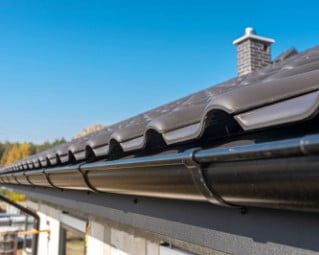
Blocked gutters are responsible for more roof-related water damage than most homeowners realise. When gutters fill with leaf litter and debris, water backs up under the roofline, overflows onto fascia boards, and works its way into the roof cavity. The Central Coast's mix of coastal winds, gum trees, and sub-tropical vegetation makes gutter blockage a seasonal certainty rather than a possibility.
Clean gutters twice a year at minimum: once after leaf fall (April–May) and once before storm season (September). After any significant storm, check that downpipes are clear and running freely. Standing water in gutters for more than 24 hours after rainfall indicates a blockage or fall problem.
For gutter repairs — leaking joints, sagging sections, separated downpipes — address these promptly. A failing gutter undermines your roof's ability to drain properly.
Caring for a Tiled Roof
Tile roofs require attention to a few specific failure points:
- Cracked or slipped tiles: From the ground, look along the roof plane for any tiles that sit at a different angle from their neighbours, or that show visible cracks. Either condition allows water in.
- Ridge capping condition: The mortar pointing along ridge and hip capping is the most maintenance-intensive part of a tiled roof. It cracks and falls away over 10–15 years. Once cracking is visible, re-bedding and re-pointing is needed — don't wait for it to fall away completely.
- Moss and lichen growth: Heavy biological growth holds moisture against tile surfaces and accelerates tile deterioration. Light growth can be treated with a biocide spray from a licensed contractor; heavy growth signals it's time to assess whether a full roof restoration is warranted.
- Valley condition: Roof valleys channel significant water flow during heavy rain. Corroded, cracked or debris-blocked valley iron is a common and serious leak source.
Caring for a Metal Roof
Metal roofs — particularly Colorbond — are low-maintenance compared to tiles, but they're not maintenance-free:
- Check screws and fasteners annually — corroded or backed-out screws create water entry points at each penetration
- Inspect all penetrations and flashings — the metal-to-metal and metal-to-masonry junctions are the vulnerable points
- Remove debris from valleys and gutters — leaf accumulation holds moisture against the metal surface and accelerates corrosion at contact points
- Look for scratches through the coating — bare metal exposed to coastal salt air corrodes faster than the surrounding coated surface; touch up minor scratches with appropriate touch-up paint
- Check any roof penetrations (skylights, vents, whirlybirds) — the seals around penetrations degrade over time and should be resealed at each inspection cycle
Overhanging Trees: An Underrated Risk
Tree branches overhanging the roof create multiple problems: they deposit debris continuously into gutters and valleys, they provide a highway for possums and rodents to access the roof, and during storm events they can make direct contact with the roof surface — cracking tiles or denting and scratching metal.
The maintenance rule is simple: no branches should overhang the roofline. If a branch can touch the roof in high wind, trim it back. Annual trimming with an arborist is cheaper than the roof and gutter repairs that overhanging trees cause over time. Read about the best time to schedule roof maintenance to coordinate this with your annual roof check.
Annual Inspection
Book Your Roof Maintenance Inspection
Our inspections cover the full roof surface, flashings, valleys, ridge and hip capping, gutters, and fascia. We provide a written condition report and quote for any work needed — no charge for the inspection.
Tags
Central Coast Roofing
Licensed roofing contractors serving Gosford, Wyong, Terrigal and all of the Central Coast NSW. Over a decade of residential and commercial roofing experience.