No roofing material is completely fireproof — but the material you choose can make a decisive difference in how your home responds to a fire event. For Australian homeowners, this is not a theoretical concern. Ember attack during bushfire events travels kilometres ahead of flame fronts, landing on roofs and igniting homes that are nowhere near the fire line.
This guide explains how fire resistance is classified for roofing materials in Australia, compares the main material types, and outlines what to consider when replacing or upgrading your roof.
Why Fire Resistance Matters for Your Roof
The roof is the largest exposed surface of any home and the most vulnerable during a bushfire or structure fire. Embers can accumulate in gutters and under roof edges, igniting combustible materials. Radiant heat from a neighbouring structure can raise roof temperatures to ignition point. Once the roof ignites, the fire progresses through the entire structure rapidly.
For the Central Coast, the bush-urban interface runs through many residential areas — Gosford, Terrigal hinterland, and areas around the national parks all sit within or adjacent to bushfire prone land. Fire resistance is not a concern only for rural properties.
Beyond safety, fire resistance ratings also affect your home insurance premiums and, for new builds and major renovations, what materials are approved under the Australian Standard AS 3959 for construction in bushfire-prone areas.
Understanding Fire Resistance Ratings
In Australia, roofing products are assessed under two frameworks that are worth understanding:
| Rating | What it means |
|---|---|
| Class A | Highest fire resistance — effective against severe fire exposures. Can withstand burning brands (embers) without igniting. |
| Class B | Moderate fire resistance — effective against moderate fire exposures. |
| Class C | Lowest classification — effective only against light fire exposures. Not suitable for high-risk bushfire zones. |
For properties in designated Bushfire Attack Level (BAL) zones, AS 3959 specifies minimum material requirements. Confirm your property's BAL rating with your local council.
Metal Roofing (Colorbond / Steel)
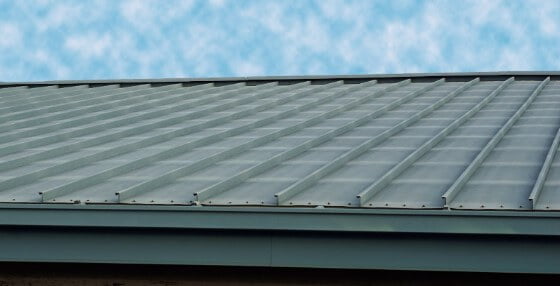
Metal roofing — particularly Colorbond steel — is the benchmark for fire resistance in Australian residential construction. Steel does not combust. It carries a Class A fire resistance rating and is non-combustible as defined under the National Construction Code.
- Does not ignite from ember attack or radiant heat
- Approved for use in all Bushfire Attack Level zones including BAL-FZ (flame zone)
- Lifespan of 40–70 years with minimal maintenance
- Lightweight compared to tile — suits a wide range of structural systems
- Available in the full Colorbond palette — no compromise on aesthetics
For homeowners replacing a tile roof in a bushfire-prone area, or those who want the highest possible fire resistance combined with longevity and low maintenance, Colorbond metal is the clear first choice.
Concrete and Clay Tiles
Concrete and terracotta (clay) tiles are non-combustible materials and carry Class A fire resistance ratings. The tiles themselves won't burn — they're fundamentally resistant to ignition from ember attack or direct flame.
The vulnerability in a tiled roof system lies not in the tiles but in the sarking (underlay), timber battens, and any gaps under the roof edge where embers can accumulate and ignite. For high bushfire risk zones, ember-proof sealing under the eaves and the use of non-combustible sarking becomes critical alongside the tiles themselves.
Concrete and clay tiles are a practical and proven choice for Central Coast homes — the majority of the residential housing stock uses them. Their weight requires a sound structural system, but for homes built to handle tiles, they offer excellent fire performance alongside good thermal mass and longevity.
Slate Tiles
Natural slate is one of the most fire-resistant roofing materials available — it's stone, and stone doesn't burn. Slate carries a Class A rating and has been used on heritage buildings for this reason as much as for aesthetics.
The practical barriers for most Central Coast homeowners are cost and weight. Slate is expensive to source and install, and requires a structurally robust roof system. It's not a mainstream choice for new residential work in NSW, but it remains a valid option for heritage restorations or high-specification builds.
Synthetic Roofing Shingles
Modern synthetic shingles — typically polymer-based composites that replicate the look of slate or timber shake — have improved significantly in fire resistance. Quality products carry Class A fire ratings and are specifically engineered for fire performance. They're lighter than concrete tile and can be a cost-effective alternative to natural slate aesthetics.
Verify that any synthetic product is tested and rated to the relevant Australian standard before proceeding — the market varies considerably in quality and the term "fire resistant" without a classification rating is meaningless.
Fire Resistance at a Glance
| Material | Fire Rating | BAL Zones Suitable |
|---|---|---|
| Metal (Colorbond/steel) | Class A — Non-combustible | All zones incl. BAL-FZ |
| Concrete / clay tiles | Class A | Most zones (check sarking) |
| Natural slate | Class A — Non-combustible | All zones |
| Synthetic shingles | Class A (quality products) | Verify per product |
Additional Fire Safety Measures
Even with a Class A roof, fire preparedness involves the whole roofline system:
- Keep gutters clear of leaf litter — particularly in the lead-up to summer. Dry debris in gutters is a primary ignition source during ember attack.
- Install ember-guard mesh in gutters if your property is in a bushfire prone area — this prevents ember accumulation in the gutter channel.
- Seal gaps under eaves and at the roofline edge where embers can enter the roof cavity.
- Schedule a professional roof inspection after any storm event or local fire activity — damaged roofing creates vulnerabilities.
- If considering a full roof replacement, use the opportunity to upgrade to the highest fire-resistant system appropriate for your zone and budget.
Talk to a Roofer
Considering a Fire-Resistant Roof Upgrade?
We can assess your current roof, advise on the right material for your BAL zone, and provide a written quote for replacement or restoration. Free inspection, no obligation.
Tags
Central Coast Roofing
Licensed roofing contractors serving Gosford, Wyong, Terrigal and all of the Central Coast NSW. Over a decade of residential and commercial roofing experience.